In our digital age, especially when social media platforms become an indispensable part, the concept of online identity has become more noticeable than ever because of the appearance of the significant social media use and new social media trends. However, although people nowadays who are a part of the social media community are actually familiar with the concept of online identity, the definition of online identity when it comes to academic term is still vague to most of them.
Online identity can be defined as the way a person or an organisation presents themselves online. According to Geva, Singer and Tsechansky (2019), online identity can be seen as the result of a self-impression management process that happens in virtual world. In other words, it is a goal-directed process in which many individuals consciously try to control others’ perceptions about themselves on online platforms (Geva, Singer & Tsechansky 2019).
Online identity is the way that people are situated and situate themselves discursively in relation to context-specific social norms, which determine and constitute identities as subject positions on online platforms.
(Smith & Watson 2014)
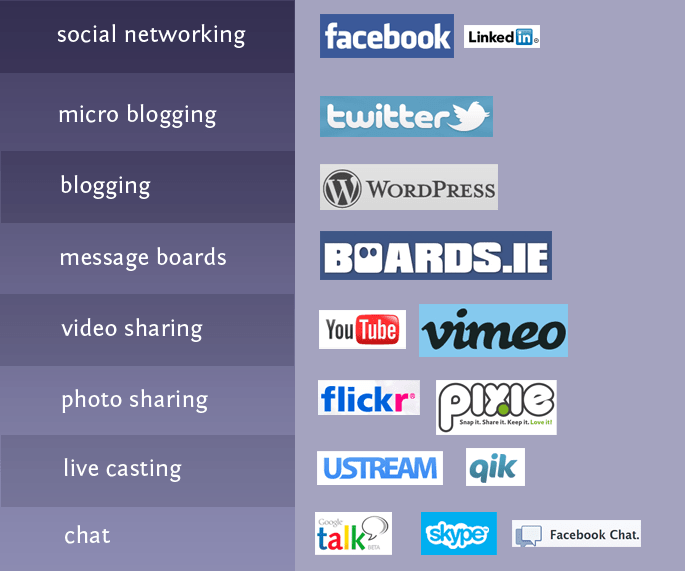
Social media platforms are one of the most vivid elements that make online identity become a thing in our digital age. According to Geva, Singer and Tsechansky (2019), websites and social media platforms have become a highly significant communication medium because of their quick, easy and 24/7 accessibility which offers users convenient and speedy communication without time and place restraints. As a result, thanks to these features, the proportion of social media users has experienced a significant increase. Moreover, its wide spreadability which creates a huge trend among different communities among places in the world, especially the young, makes building unique online identity become a competition.
According to the magazine article written by Premuzic (2015), our online behavior does not reveal comprehensively our real-life personas since people intentionally upload on social media platforms what they want others to know about. “In the expanding array of virtual environments, identities become increasingly manipulable” (Smith & Watson 2014, p.82). Since social media platforms give the users the freedom to post and upload content that they want, it is hard to evaluate them through their online identity. A person can have many different online identities base on their purposes and their target audience on different platforms.
My online identity varies over different social media platforms since each of them is used for different purposes. While Instagram and Facebook are for private use, my Twitter account is set up for studying purpose. Therefore, friends or followers that connect with me on Facebook or Instagram will see a different identity of me from those who connect with me on Twitter. In this assignment, I’m going to focus on discussing my online identity on Twitter.
Since my Twitter is not for private use, I try to restrict content about my personal life as much as I can because these are not what I want my followers on Twitter to see and to know about. In other words, I try to hide myself from this platform. Instead of putting up pictures of myself on profile and background picture, I use photos that I took myself. However, once again, since my Twitter is for academic use, in the bio part, I still provide true information about me, such as my education, the name of the college and location, so that at least my lecturer and classmates can identify me.
Since I tend to focus more on academic-related content on my Twitter. Having a quick look at my account, tweets about my units make up the majority of my page.
Once people access my account, they can easily see that I tweeted about my About.me site
A movie that related to social media topic
an online photo that shows copy right in it.
On tweets for academic requirement, units code hashtag is always attached to the tweet.
However, just focusing on academic stuff makes it hard for me to keep using Twitter sustainably. Therefore, I also share a small angle about one of my favorite things to do which are cooking and food. The pictures that I tweet are taken by myself so I did not put the reference on the tweet.
Overall, my online identity on Twitter is not too clear since the limit number of tweet. However, it can be easily seen that it is more like an academic account and add up with a little of personal interest.
Reference
“Online identity” by Eric delcroix ( CC BY-NC-SA 2.0 )
“Social media platforms” by Sean MacEntee is licensed by CC BY 2.0
Smith, S & Watson, J 2014, Virtually Me: A Toolbox about Online SelfPresentation, The University of Wisconsin Press, Madison, Wisconsin.
Geva, H, Singer, G & Tsechansky, M 2019, Using retweet when shaping our online persona: Topic modeling approach, MisQuarterly, retrieved 15 December 2019, <file:///C:/Users/Lenovo%20Thinkpad/Desktop/alm101%20a2%20article%202.pdf>
Premuzic, TC 2015, ” How different are your online and offline identities?”, The Guardian, 24 September, retrieved 26 August 2019, <https://www.theguardian.com/media-network/2015/sep/24/online-offline-personality-digital-identity>
 Ashleigh's getting to know media journey