These days, it is not hard to see “gamification” applied in both learning and teaching. Today’s learners are digital natives because they grow up with it. Therefore, teachers are also gradually approaching technological methods into their teaching to catch up with students’ needs and requirements as well as shorten the generation gap with their students. One of the most common technological studying means that are both used by learners and teachers is gamification. In this blog, we are going to find out why and how gamification is used in education as well as having a look at apps that are applied the technique.
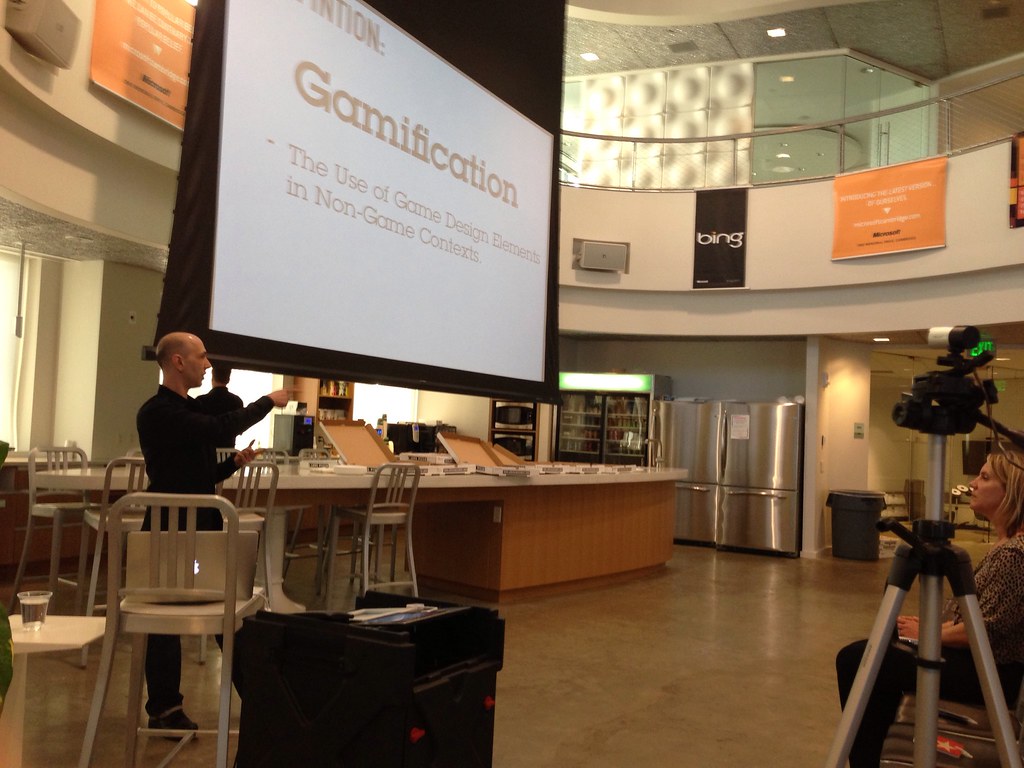
Why gamification is commonly used in class?
Since gamification is now widely used in classes, I am personally always curious about the secret reason behind gamification that works effectively for learners. According to Kapp (2012), gamification in teaching and learning is the application of “game-based mechanics, aesthetics and game thinking which help to engage people in activities, create motivation for action, promote learning as well as solve problems”. In other words, gamification in education can be seen as a tool to boost motivation which helps learners to be more engaged in the studying process. As a result, they can achieve the better learning outcome.
“You create these communities around the game that do an incredible amount of intellectual work, and when they’re done with the work, they will leave the game and go to another game that’s more challenging. Can you image if we had that kind of environment in classrooms?”
(Huang & Soman 2013)
Gabe Zichermann, founder and chief executive at Dopamine Inc., used to say in an interview with The Insider that the use of gamification helps to boost the figure of the abilities to learn new skills up to 40% (Giang 2013). This remarkable number shows that game approaches is creating high level motivation and commitment to learners that allows them to be fully engaged and getting involved in activities in their learning process. This is the reason why gamification is gradually becoming commonly used in education.

How to apply gamification correctly in studying?
Despite the fact that gamification is bringing a lot of benefits to the studying and learning process, just like other learning and teaching methods, gamification still has certain limitations that need to be careful when using. Therefore, how to use game approaches effectively in education has always been a hard question for teachers.
According to Kiryakova, Angelova, and Yordanova (2014), there are four main steps to effectively apply gamification in teaching and learning.
- Determining learners’ characteristics so that teachers can decide whether should the technique be used
- Defining learning objectives clearly so that teachers can set up suitable approach for the learners
- Creating the educational content and activities for gamification in order to enhance the interactivity, engagement so that learners can easily achieve the learning objects
- Last but not least, adding game elements and mechanisms to complete the process.
These steps are mainly used to guide teachers and even learners to know how and who gamification should be applied in different contexts. As understanding clearly the steps, teachers, and learners can take full advantage of gamification while controlling the limitations of the method.
The video below is a few sharing of me about some apps and websites that applying gamification into learning that I find quite effective and are being widely used.
Gamification is bringing tremendous benefits to both learners and teachers in education. Therefore, it is now gradually becoming widely used in the teaching and learning process. However, there are existing limitations of gamification that users should be aware in order to achieve the study goals comprehensively.
Reference:
Kiryakova, G, Angelova, N and Yordanova, L 2014, “GAMIFICATION IN EDUCATION”, retrieved 29 April 2021, <https://d1wqtxts1xzle7.cloudfront.net/53993982/293-Kiryakova.pdf?1501188835=&response-content-disposition=inline%3B+filename%3DGamification_in_education.pdf&Expires=1619633965&Signature=hOXmvInsCYcwTR8~powI7a4LOAeNpqpQhDiq6QF1Ym3SWkk4oqWRXcNIUPFTknRMrfTPEk1MdBuSyofzoz2Bfdd2yZpWO~Y2hC0xQwmLbbLIYgmkLu8D-IfY2hc9Qkg4tbtXuN3u~hml10FWHe9p~MR3CEgh5i4Sf-LDakxSn1ssxmarWy0KRqQ873-OsNj-fE35MAbBd0ugTT1pgTFR7SjzO3SZQ394K~DnQPumd0rMRC1Cfo8QkCBsvHAk7CAhymTmTAsp3jMdE-Hs7W3KdgHQH30TYVCfNvDz4S6yGU35DxiqgSxZiCffPtzlim~87sVptyi~eWrxEziZK0N26Q__&Key-Pair-Id=APKAJLOHF5GGSLRBV4ZA>.
Kapp, KM 2012, ” The gamification of learning and instruction: game-based methods and strategies for training and education”, John Wiley & Sons, retrieved 29 April 2021, <https://books.google.com.vn/books?hl=en&lr=&id=M2Rb9ZtFxccC&oi=fnd&pg=PR12&dq=The+gamification+of+learning+and+instruction:+game-based+methods+and+strategies+for+training+and+education&ots=JyIk427G9L&sig=earo1fKVkPWyDDe_BKX76DRuCOw&redir_esc=y#v=onepage&q=The%20gamification%20of%20learning%20and%20instruction%3A%20game-based%20methods%20and%20strategies%20for%20training%20and%20education&f=false>.
Giang, V 2013, “Gamification Techniques Increase Your Employees’ Ability To Learn By 40%”, Insider, retrieved from 28 April 2021, <https://www.businessinsider.com/gamification-techniques-increase-your-employees-ability-to-learn-by-40-2013-9#:~:text=Illustration%20by%20Mike%20Nudelman%20If,campaigns%20for%20employees%20and%20consumers.>.
Huang, W & Soman, D 2013, ” A Practitioner’s guide to gamification of education”, University of Toronto, retrieved from 28 April 2021, <file:///C:/Users/Lenovo%20Thinkpad/Downloads/GuideGamificationEducationDec2013.pdf>.
 Ashleigh's getting to know media journey